How to Choose a High-Quality LED Downlight – A Technical Guide by Zhongshan Boyin Lighting Co., Ltd.
By Zhongshan Boyin Lighting Co., Ltd.
Leading LED lighting solution provider based in Zhongshan, China.
Choosing a good LED downlight is not just about brightness.
At Zhongshan Boyin Lighting Co., Ltd, we help clients worldwide select the right downlights based on real performance indicators, not just price.
Below is our step-by-step technical guide to help you evaluate LED downlights with confidence.
Why it matters:
Higher efficacy means more light with less electricity.
Our standard:
Good: 90–110 lm/W
Excellent: 120–150+ lm/W
Real case:
A European hotel replaced 200 pcs of 15W downlights (80 lm/W) with our 12W (130 lm/W) model.
Light output: same 1,560 lm.
Energy saved: 3W × 200 × 5,000 hours/year = 3,000 kWh/year.
Tip: Always ask for lm/W data at steady state (30 minutes warm-up), not initial cold test.
Why it matters:
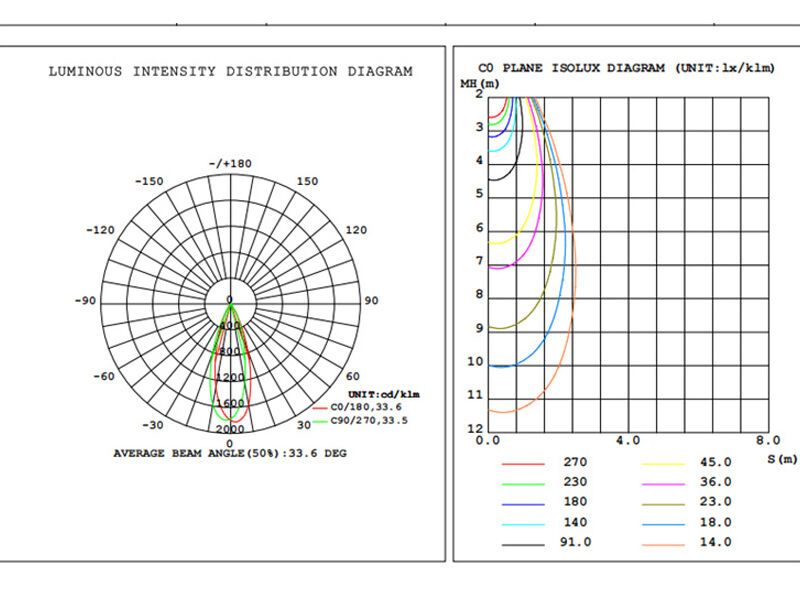
Beam angle determines the area coverage and light intensity at a given height. Wrong angle creates dark spots or harsh pools.
Beam angle categories:
| Beam Angle | Spread | Best for |
| 15°–25° | narrow | Accent lighting (art, displays, columns) |
| 30°–45° | Medium | Retail highlights, shelves |
| 60°–80° | Wide | General lighting for low ceilings (2.5–3m) |
| 90°–120° | Flood | High ceilings (3.5–5m), uniform area lighting |
Boyin’s standard offering: 24°, 38°, 60°, 90°, 110° (interchangeable optics available)
How to choose beam angle by ceiling height
| Ceiling Height | Recommended Beam Angle | Spacing (center to center) |
| 2.4 – 2.7 m | 60° – 80° | 1.5 – 2.0 m |
| 2.7 – 3.2 m | 80° – 100° | 2.0 – 2.5 m |
| 3.2 – 4.0 m | 90° – 120° | 2.5 – 3.0 m |
| > 4.0 m | 100° – 120° or multiple narrow angles | Depends on layout |
Real case – warehouse lighting:
A 4.2m ceiling warehouse tried 60° downlights → dark spots between fixtures.
Switched to our 110° wide beam with same 18W → uniform illumination improved by 42% (lux variation reduced from ±38% to ±12%).
Real case – retail accent lighting:
A shoe store used 90° downlights on display shelves → light spilled to floor, weak on products.
Changed to our 38° beam angle with 12W → product brightness increased 210% at shelf level, no extra wattage.
Tip: For adjustable/movable downlights (gimbal types), choose narrower angle (24°–38°) for flexibility.
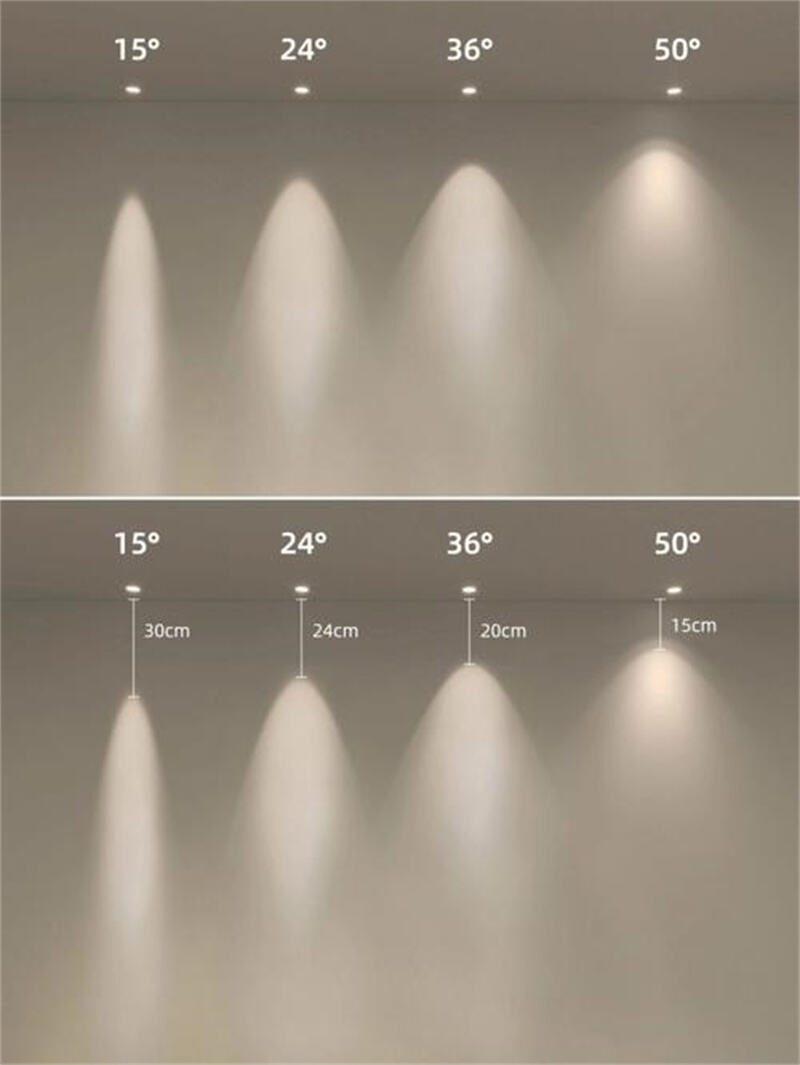
Beam angle vs. field angle – know the difference
| Term | Definition | Typical ratio |
| Beam angle | Where intensity ≥ 50% of peak | Main spread |
| Field angle | Where intensity ≥ 10% of peak | ~1.5× beam angle |
Example: A downlight labeled 60° beam angle actually casts visible light up to 90° field angle – important for spacing calculations.
 Hot News
2026-05-07
2026-04-30
2026-04-23
2026-04-16
2026-04-09
2026-04-02

 EN
EN